

Views: 12221 Author: Site Editor Publish Time: 2025-01-24 Origin: Site
In the vast network of long-distance natural gas transmission pipelines—the arteries of modern energy supply—the compressor station stands as the vital heart. Its core component, the gas compressor, is responsible for maintaining pressure and flow over thousands of kilometers. Selecting the optimal compressor is not merely an equipment purchase; it is a strategic decision that fundamentally impacts the pipeline's operational expenditure, availability, and long-term viability. Faced with choices between centrifugal and reciprocating technologies, various driver options, and a complex array of performance parameters, making the correct selection requires a systematic approach. This guide, based on established engineering principles and industry practices, provides a detailed framework for navigating the key technical of long-distance pipeline compressor selection.
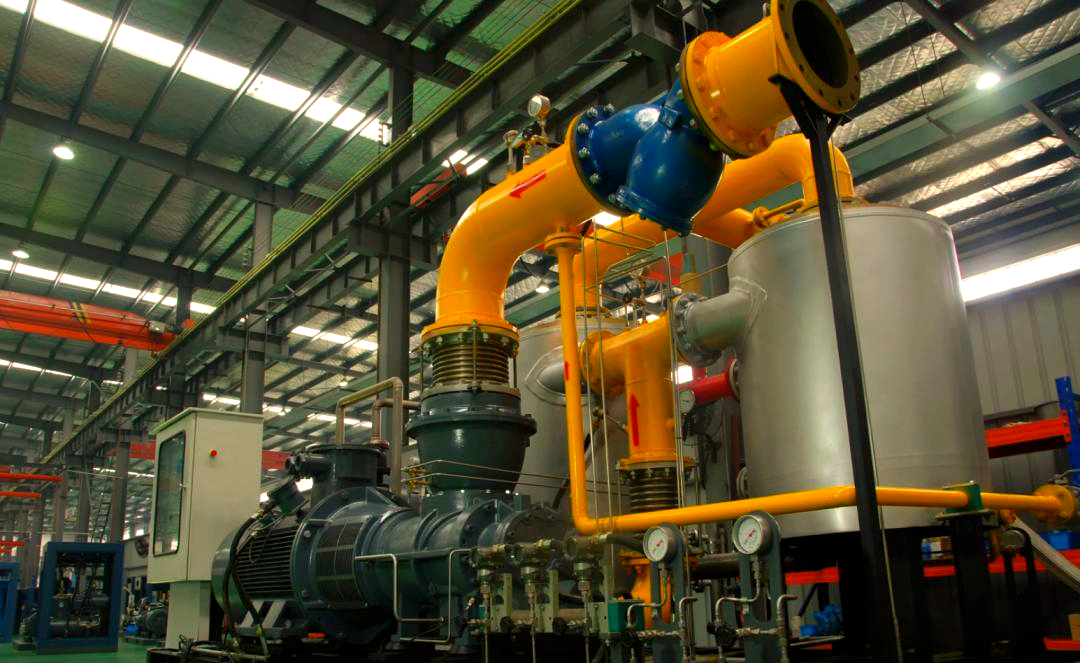
1. The Foundational Choice: Centrifugal vs. Reciprocating Compressors
The primary and most consequential decision is understanding the distinct operational domains of the two dominant compressor technologies.
Centrifugal Compressors are the undisputed workhorses of high-flow, mainline transmission. They operate by imparting kinetic energy to the gas via a high-speed rotating impeller, which is then converted to pressure energy in a diffuser. For trunk lines with daily capacities ranging from tens to hundreds of millions of standard cubic meters, centrifugal compressors are the most economical choice due to their pulsation-free, continuous flow, high reliability, and large single-unit capacity. Major global pipelines, such as the West-East Gas Pipeline in China, predominantly employ centrifugal units in their stations. The market for large pipeline centrifugal compressors is characterized by advanced technology and is led by a few international OEMs (Original Equipment Manufacturers), with core competencies in aerodynamics, rotor dynamics, and precision manufacturing.
Reciprocating Compressors excel in applications requiring high pressure ratios at lower to medium flow rates, or where gas composition is challenging. They compress gas directly via a piston within a cylinder. In pipeline systems, their typical roles include:
Pipeline Boosting & Storage Injection: Compressing gas from a lower pipeline pressure to the high pressure required for storage caverns or pipeline sections.
Peak Shaving & Branch Line Delivery: Providing excellent turndown and part-load flexibility for fluctuating demand or smaller throughput applications.
Handling Difficult Gas: Often demonstrating better tolerance for wet or contaminated gas streams (prior to treatment for mainline entry).
Key Selection Advice: For standard, high-flow trunk lines where capacity exceeds ~5 million standard cubic meters per day and the pressure ratio is moderate (typically between 1.2 and 2.0), the centrifugal compressor should be the default starting point for evaluation. For applications demanding very high pressure ratios, lower flow rates, or extreme operational flexibility, the reciprocating compressor is likely superior. Many modern stations employ a hybrid configuration, using centrifugal compressors for base load and reciprocating units for specialized duties, to optimize overall system performance.
2. Beyond the Data Sheet: Analyzing Five Core Performance Indicators
Once the technology path is chosen, the evaluation of specific units must focus on these five dimensions.
1. Energy Efficiency: The Core of Life-Cycle Cost
Compressor efficiency directly determines fuel or electricity costs, the largest portion of operational expenditure. Key metrics are polytropic efficiency or isentropic efficiency. High-end centrifugal compressors can achieve polytropic efficiencies above 85%. The implementation of Variable Speed Drives (VSD) is the most impactful efficiency technology today. By allowing the compressor speed to match real-time pipeline demand, VSDs eliminate massive energy losses associated with "inlet throttling" or "recycle" control methods, potentially saving 20%-40% in energy at part-load conditions.
2. Operational Flexibility & Turndown
Pipeline flow, inlet pressure, and temperature fluctuate with market demand and seasons. A compressor must operate stably and efficiently across a wide operational window. Critical parameters include:
Turndown Range: The ratio of stable minimum flow to maximum flow. Technologies like VSDs and adjustable Inlet Guide Vanes (IGVs) widen this range.
Surge Control: Centrifugal compressors have a minimum flow limit (surge line). A sophisticated, fast-acting anti-surge control system is non-negotiable for protection and flexibility.
3. Driver Selection: The Electric Motor vs. Gas Turbine Debate
Electric Motor Drive: Offers high efficiency (>97%), simpler maintenance, steady operation, and zero local emissions. It is the preferred choice where a stable and cost-effective electrical grid is available. The Total Cost of Ownership (TCO) for motor-driven units is often favorable in regions with reasonable electricity tariffs.
Gas Turbine Drive: Uses pipeline gas as fuel, providing complete energy independence, making it ideal for remote locations without reliable grid access. Although their thermal efficiency (approx. 30%-40%) is lower than a "motor + VSD" combination, their high-temperature exhaust can be used in waste heat recovery systems (e.g., for steam or hot water), creating a combined heat and power solution that boosts overall site efficiency to over 70%.
4. Reliability & Availability: A Test of Design, Materials, and Systems
Pipeline compressors are expected to operate over 8,000 hours annually, with availability targets often exceeding 98%. This reliability is engineered through:
Robust Aerodynamic & Rotordynamic Design: Avoiding critical speeds and ensuring minimal vibration.
Premium Materials & Manufacturing: Impellers made from high-strength stainless steel or titanium, precision-machined and dynamically balanced.
Advanced Bearing & Seal Technology: Tilting-pad bearings for superior damping; dry gas seals for zero process gas leakage.
System Redundancy: Critical instrumentation, lube oil pumps, and control systems are typically duplicated (N+1 redundancy).
5. Total Life-Cycle Cost (LCC) Analysis
The initial purchase price often constitutes only 30%-40% of the TCO. A comprehensive 20-30 year LCC analysis must include:
Energy Costs (the largest share, 50%-70%)
Maintenance & Overhaul Costs
Spare Parts Inventory
Potential Revenue Loss from Unplanned Downtime
3. System Integration & Station Design: The Compressor is Not an Island
A compressor's performance is realized within the context of the entire station. Excellent selection must concurrently consider:
Unit Configuration & Redundancy: Common strategies are "N+1" or "N+2" (N units operating, 1 or 2 on standby). With highly reliable, VSD-equipped electric motor drives, a "spinning standby" or "hot standby" approach can be used, where all units are online but some operate at low load, enhancing flexibility and potentially reducing total installed power.
Thermal Systems & Waste Heat Utilization: Gas turbine exhaust at 400-500°C presents a major opportunity. Integrating a Waste Heat Recovery Unit (WHRU) to generate steam or power can elevate overall site efficiency significantly. Heat from compressor intercoolers and cylinder jackets can also be recovered for station heating.
Modular & Skid-Mounted Design: Especially for offshore platforms or space-constrained sites, packaging the compressor, driver, and auxiliary systems onto integrated skids reduces field construction time and improves quality control.
4. Future-Proofing: Intelligence and Emerging Challenges
Modern compressor selection must include provisions for the future of operations:
Predictive Maintenance: Moving from scheduled maintenance to condition-based strategies using AI algorithms that analyze real-time vibration, temperature, and performance data to forecast remaining life for bearings, seals, and other components.
Digital Twin: Creating a dynamic virtual model of the compressor synchronized with operational data allows for performance optimization, scenario simulation, and operator training.
Preparing for Energy Transition: As hydrogen gains prominence, evaluating a compressor's compatibility with hydrogen-blended gas (addressing concerns like hydrogen embrittlement, seal compatibility, and efficiency impacts) is becoming prudent. Some next-generation centrifugal compressors are already being designed to handle hydrogen blends of up to 20-30% by volume.
Pre-Selection Checklist
Before finalizing a decision, confirm the following with your team and potential suppliers:
1. Defined Operating Conditions: Near-term and long-term design flow rates, inlet pressure/temperature ranges, discharge pressure requirements, and detailed gas composition analysis.
2. Site & Energy Constraints: Available driver energy (grid capacity/cost vs. gas supply/price), physical footprint limitations, and environmental conditions (ambient temperature, altitude).
3. Economic Model: A developed 20-year TCO model incorporating energy, maintenance, and capital costs.
4. Reliability Targets: Clear availability goals, redundancy strategy, and supplier support package (e.g., remote monitoring, guaranteed parts availability).
5. Technology Roadmap: Assessment of the unit's hardware readiness for smart O&M upgrades and potential adaptability for future changes in gas composition.
Conclusion
The selection of a compressor for a long-distance natural gas pipeline is a complex, multidisciplinary decision integrating mechanical engineering, thermodynamics, economics, and operations philosophy. There is no universal "best" choice, only the "most suitable" solution for a specific pipeline system. The most effective path forward is to look beyond comparing individual equipment specifications, adopt a full-system, life-cycle perspective, and collaborate closely with partners who possess deep engineering expertise and a proven global support network. This approach is fundamental to ensuring the strong, reliable, and efficient heartbeat of the energy pipeline for decades to come.


