

Views: 12167 Author: Site Editor Publish Time: 2025-01-15 Origin: Site
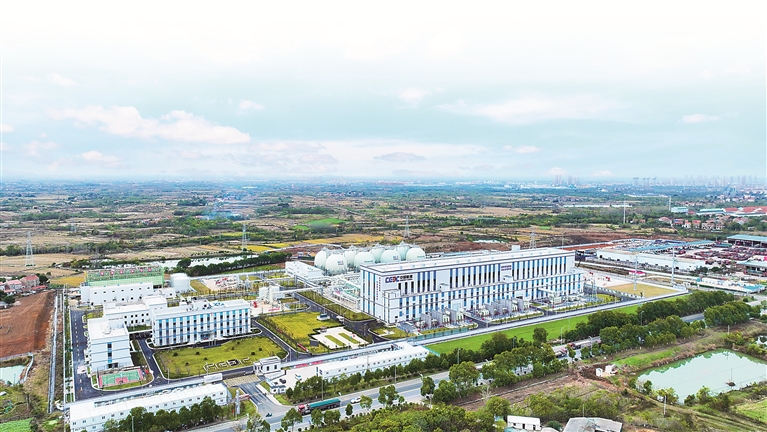
With the full-capacity grid connection of the 300 MW "Nengchu No.1" Compressed Air Energy Storage (CAES) power station in Yingcheng on January 9, 2025, China's CAES industry has erected a new global milestone. This event signals a pivotal shift from pilot demonstrations to the threshold of large-scale commercialization. At the dawn of 2025, a wave of technological innovation, diversified application exploration, and cross-sector integration is actively shaping the future of this critical long-duration energy storage sector.
1. A Scaling Milestone: The Leap from Pilot to Commercial Viability
The successful operation of the 300 MW project, which set world records in single-unit power, storage capacity, and conversion efficiency, serves as ultimate validation for its engineering and economic feasibility. With a storage capacity of 1,500 MWh and a system efficiency approaching 70%, it demonstrates that Advanced Adiabatic CAES (AA-CAES) technology in China has overcome key hurdles in heat recovery and equipment localization, laying a solid foundation for widespread deployment.
This leap is rooted in a steadfast commitment to a non-supplementary combustion, zero-carbon emission technological path. Moving beyond the older, fossil-fuel-dependent models used in early international projects, China's primary R&D focus is firmly on cleaner, more efficient systems. Concurrently, the utilization of abundant underground salt caverns for air storage has become a cornerstone for scaling. It is estimated that China possesses thousands of suitable salt caverns, representing a potential storage capacity on the gigawatt scale—enough to meet the peak demand of a megacity—thereby offering immense potential for grid stability and renewable energy integration.
2. Technological Frontiers: The Race for Higher Efficiency and Adaptability
With the foundational challenge of large-scale project execution met, the industry's focus is intensifying on enhancing efficiency, reducing costs, and increasing operational flexibility. Innovations aimed at optimizing the core compression/expansion processes are particularly active.
A key frontier is the pursuit of "Near-Isothermal Compression/Expansion" technology. Unlike adiabatic compression which generates significant heat, near-isothermal processes aim to minimize temperature change through intensive heat exchange during compression, theoretically achieving higher efficiency. Domestic research institutions have proposed and studied methods like the "multi-tube array near-isothermal compressed air energy storage system." Research published in 2024 describes a device coupling a liquid piston with tubular heat exchange, notably suggesting the use of a diaphragm structure to achieve gas-liquid isolation and prevent air dissolution. This approach, showing a compression efficiency of up to 70% under specific parameters in simulations, presents a promising alternative for high-pressure, high-efficiency processes.
Another clear trend is the diversification of technological pathways. Alongside the now-proven AA-CAES, other routes like Liquid Air Energy Storage (LAES), Supercritical CAES (SC-CAES), and Underwater CAES (UWCAES) are progressing at different stages. LAES, with its higher energy density, has reached the megawatt-scale demonstration phase. This diversified landscape provides a range of technical options suited to various geographical conditions and application needs.
3. Converging Pathways: "CAES+" Ushers in an Era of Multi-Energy Synergy
The complexity of modern power systems demands solutions beyond single-technology storage. A defining trend in early 2025 is the deepening integration of CAES with other technologies like hydrogen energy and electrochemical storage to create complementary, hybrid energy systems.
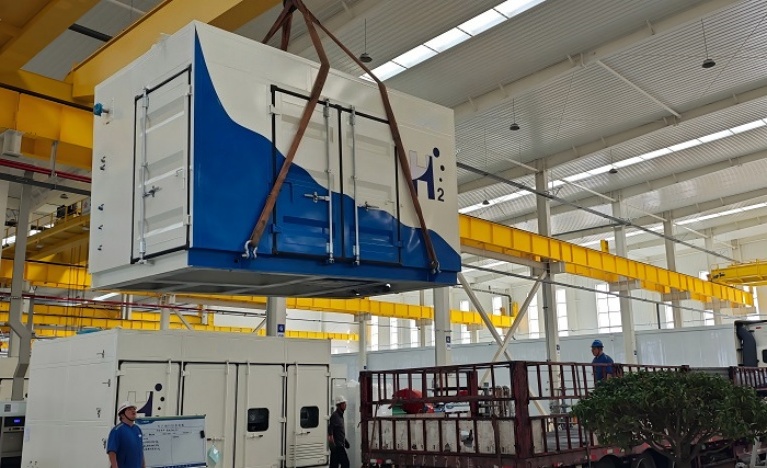
The "Hydrogen + CAES" combination is viewed as a strategically significant synergy. Hydrogen, an ideal medium for long-term and seasonal storage, complements CAES in duration and function. Integrated demonstration projects, such as a wind-solar-hydrogen-methanol initiative in Yunnan, plan to utilize CAES alongside flow batteries, coupled with solid-state hydrogen storage, to produce green methanol. Within this convergence, diaphragm compressors, critical for hydrogen compression and boosting, see their technological advancement become paramount. In 2025, domestically developed diaphragm compressor units have been deployed in integrated hydrogen energy stations, featuring high pressure, large flow rates, and intelligent safety controls tailored for the hydrogen industry's needs.
Furthermore, business models like Shared Energy Storage and hybrid storage systems are gaining traction in the CAES field. By operating as an independent grid service provider or in tandem with renewable power plants, CAES projects can improve their economic viability and resource utilization. Industry experts point to virtual power plant aggregation and shared storage models as key directions for optimizing revenue and driving scale.
4. The Road Ahead: Tackling Challenges in Efficiency, Cost, and Ecosystem Development
Despite the promising outlook, the path to large-scale CAES faces hurdles. The industry acknowledges that technological maturity varies, with some pathways requiring further R&D. As the industry has yet to achieve the massive economies of scale seen in solar PV or lithium batteries, system costs need to be driven down through continued innovation and supply chain optimization.
Looking ahead through 2025 and beyond, the sector's development will concentrate on several critical areas:
1. Enhancing System Efficiency and Economics: Continued R&D into higher-performance core equipment (compressors/expanders) and optimized system design, particularly for novel cycles like near-isothermal compression.
2. Deepening Technology Fusion and Scenario Innovation: Expanding research and demonstration of multi-energy systems (e.g., "Wind-Solar-Hydrogen-Storage") and exploring CAES applications in industrial parks and behind-the-meter scenarios.
3. Fostering a Robust Industrial Ecosystem: Establishing comprehensive industry standards, performance testing protocols, and clear, incentive-driven market mechanisms to attract investment and ensure sustainable commercial growth.
In summary, China's CAES industry stands at a historic inflection point in early 2025. Grounded by the success of flagship projects, propelled by relentless innovation, and facing a vast horizon of integrated applications, this established yet evolving technology is integrating into the new power system at an unprecedented pace, promising to deliver a powerful and stable force for the global energy transition.


