

Views: 21315 Author: Site Editor Publish Time: 2025-01-31 Origin: Site
In the global wave of transitioning to a clean, low-carbon energy structure, large-scale, long-duration energy storage technology has become a critical pillar for constructing a new power system dominated by renewable energy. Among these, Compressed Air Energy Storage technology stands out due to its significant advantages in large capacity, long lifespan, high safety, and low cost, rapidly moving from cutting-edge research to the forefront of large-scale commercial applications. In recent years, China has achieved a historic leap in this field—from following to leading—with a series of world-class projects entering operation, marking China's entry into a new phase of scaled and high-quality development for its CAES industry.
1. Explosive Scaling Up: A Leap in Installed Capacity and Project Deployment
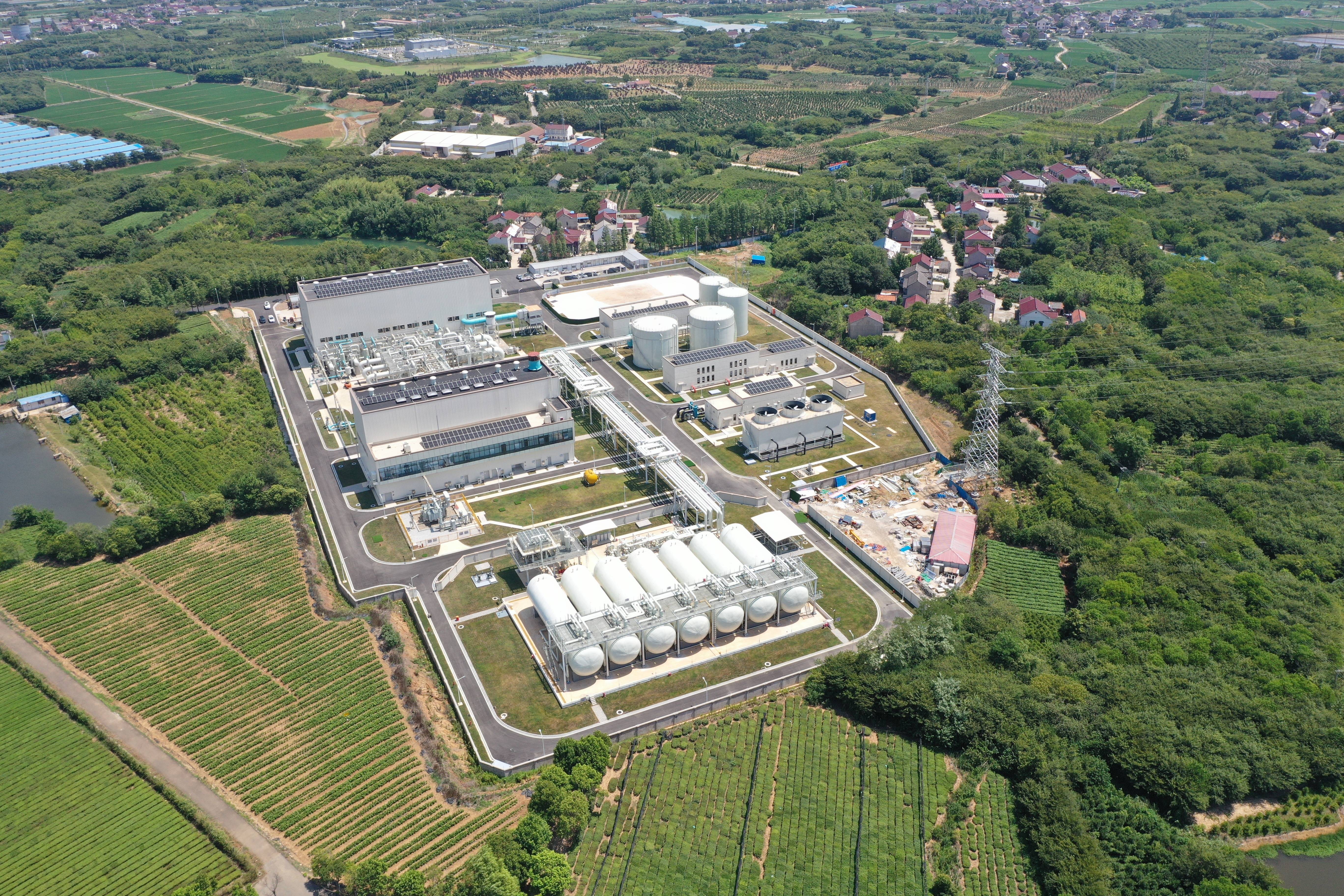
China's CAES sector has hit the accelerator, exhibiting explosive growth in both installed scale and application scenarios. Industry data shows that as of the end of July 2025, China had completed and grid-connected 16 CAES projects, with a cumulative installed capacity of 1,273.5 MW. This momentum aligns closely with the national "14th Five-Year Plan" goal of promoting the engineering application of hundred-megawatt-level technologies.
The scale of individual projects continues to break world records. From 2024 to 2025, several 300 MW-class benchmark projects were successively commissioned, becoming significant milestones. For instance, the 300 MW-level CAES demonstration project in Yingcheng, Hubei, set three world records for single-unit power, storage capacity, and conversion efficiency. Shortly after, the 350 MW salt cavern CAES project in Tai'an, Shandong, officially began operation in April 2025, becoming the world's largest CAES power station at that time. Currently, over 100 CAES projects are under construction or in planning stages across China, covering provinces like Shandong, Gansu, Inner Mongolia, Shaanxi, Henan, and Jiangsu. These projects are designed to serve diverse scenarios including large "desert-gobi-wasteland" renewable energy bases, offshore wind power integration, and grid-side peak shaving.
2. Breakthroughs in Technological Innovation: Overcoming Efficiency, Cost, and Geographical Limitations
The rapid development of CAES in China is rooted in continuous and in-depth innovation in core technologies, successfully overcoming three major bottlenecks: efficiency, cost, and geographical constraints.
1. System Efficiency Reaches New Highs: The efficiency of early traditional diabatic CAES was generally below 50%. By focusing on the non-combustion (adiabatic) technical route, Chinese R&D teams have overcome the challenges of efficiently recovering and reusing compression heat. Currently, the design round-trip efficiency of mainstream 300 MW-class systems has stabilized at around 70%. Examples include the 60 MW project in Jintan, Jiangsu (58.2%), the 100 MW project in Zhangjiakou, Hebei (70.5%), and the 300 MW project in Feicheng, Shandong (72%). The under-construction 700 MW Phase II project in Jintan aims for a design efficiency of 70%. Research institutions have already begun targeting a system efficiency of 80%.
2. 100% Localization of Key Equipment: Achieving full supply chain autonomy is key to cost reduction. Core CAES equipment, including compressors, expanders, and heat storage/exchange systems, has now achieved 100% domestic production. Leading Chinese manufacturers like Shangu, Shengu, and Dongfang Electric possess the capability to research, develop, and manufacture large 300 MW-class compression units. The increase in localization rate has directly driven a rapid decline in construction costs, with the current unit investment cost falling to approximately 6,000-7,000 RMB/kW, expected to decrease further in the coming years.
3. Diversified Storage Methods Expand Geographical Boundaries: China has developed various gas storage technologies adapted to local conditions, greatly expanding the technology's applicable regions.
Salt Cavern Utilization: Using underground salt caverns formed after rock salt mining as storage reservoirs is currently the most mature and economical method. Leveraging its vast salt cavern resources, Feicheng, Shandong, has become a leading global hub for salt cavern CAES.
Artificial Cavities: In areas lacking natural salt caverns, excavating artificial underground cavities serves as storage. China has reached world-leading levels in this area. In 2025, a complete set of technologies for the world's highest-pressure artificial cavity gas storage was successfully verified in Changsha, Hunan. The 300 MW project in Xinyang, Henan, innovatively adopted a 15-meter super-large cavern diameter design, increasing single storage volume to 300,000 cubic meters.
Above-ground Tanks and Hybrid Models: Above-ground high-pressure storage tanks have been developed for special environments like high-altitude cold regions. The 60 MW project in Huade County, Inner Mongolia, successfully pioneered a hybrid storage model combining above-ground tanks with underground artificial cavities.
3. Clear Commercial Models and a Sound Policy Support System
As the technology matures, the commercial model for CAES is becoming increasingly clear, with profitability assured. Power stations primarily generate revenue through three channels: participating in the electricity market to capitalize on peak-valley price differences, providing ancillary services like frequency regulation for compensation, and operating as shared energy storage facilities to earn capacity leasing fees.
A robust policy framework has injected strong momentum into the industry's development. At the national level, documents like the "14th Five-Year Plan" Implementation Plan for New Energy Storage explicitly list CAES as a key innovation direction. At the local level, over 20 provinces have issued specific support policies. For example, Shandong Province mandates that salt cavern storage projects capable of continuous discharge for 4 hours or more receive a capacity compensation standard twice that of lithium battery storage, significantly improving project economics. These policies have effectively shortened the investment payback period, attracting numerous state-owned enterprises, central government-owned enterprises, and private companies to enter the field.
4. Future Outlook: Towards Higher Efficiency, Lower Cost, and Global Expansion
Looking ahead, China's CAES technology will continue to advance to higher levels:
Technological Iteration: R&D focus will shift towards 600 MW-class and even larger single-unit capacities, targeting system efficiencies exceeding 80%. The application of intelligent control, new materials (e.g., high-temperature thermal storage materials), and advanced manufacturing processes (e.g., 3D-printed impellers) will further enhance system performance and reliability.
Cost Reduction: With scaled construction, supply chain synergy, and digitalized operation and maintenance, unit investment costs are expected to drop by more than 15% from current levels, continuously strengthening competitiveness.
Scenario Deepening and Global Expansion: The technology will become more deeply integrated with photovoltaics and wind power, and customized solutions will be explored for user-side applications like industrial parks. More importantly, China has formed a complete industrial advantage encompassing technology R&D, equipment manufacturing, and engineering construction. It is now actively promoting this mature "China Solution" to the global market, contributing Chinese expertise to the world's energy transition.
Conclusion
From laboratory principle verification to the scaled commissioning of commercial power stations, China's CAES industry has completed a remarkable leap within just a few years. Through persistent technological innovation, full-supply-chain independence, and forward-looking policy guidance, China has not only solved the economic and feasibility challenges of large-scale, long-duration energy storage but has also established a leading position globally. As an indispensable "stabilizer" and "ballast stone" for the new power system, Compressed Air Energy Storage will continue to provide solid support for the energy security and carbon neutrality goals of China and the world.


